 dolphinshave2stomachs
Related Articles
Growing vegetables successfully is not only about choosing good seeds, adding fertilizer, or giving plants plenty of sunlight. One of the things I believe every gardener should pay attention to is drainage. Good drainage is one of the foundations of a healthy vegetable garden because it controls how water moves through the soil and how much moisture remains around plant roots.
When soil holds too much water for too long, vegetable roots can struggle to get the oxygen they need. This can lead to weak growth, yellow leaves, root problems, and poor harvests. On the other hand, soil that drains too quickly may not provide enough moisture for plants. This is why the goal is not simply to remove water as quickly as possible. The goal is to create balanced soil that holds enough moisture while allowing excess water to move away.
In my experience, understanding soil drainage can make vegetable gardening much easier. Once the soil has the right balance, plants generally have better conditions for healthy root development and consistent growth.
What Is Good Drainage in a Vegetable Garden?
Good drainage means that excess water can move through the soil without leaving the root zone permanently saturated. After watering or rainfall, the soil should remain moist for a reasonable period, but water should not sit around the plants for long periods.
Healthy soil contains a mixture of water and air. Vegetable roots need moisture, but they also need oxygen. When the soil becomes completely saturated, the spaces that normally contain air become filled with water. This can make it difficult for roots to function properly.
Good drainage is especially important after heavy rain. If your garden remains muddy or water collects around vegetable plants for several hours or days, it may be a sign that the soil needs improvement.
Why Vegetable Roots Need Proper Drainage
Roots are responsible for absorbing water and nutrients from the soil. They also need oxygen for normal biological processes. When soil remains saturated, roots can become stressed because there is less oxygen available around them.
Poor drainage can create several problems. Plants may grow slowly, leaves can turn yellow, and roots may become weak. In severe cases, roots can begin to decay.
This is one reason I prefer to think about watering and drainage together. Giving plants more water does not automatically make them healthier. The soil must also be capable of handling that water.
Prevents Root Problems
One of the biggest reasons good drainage is important for vegetables is that it helps protect the root system. Constantly wet soil can create conditions where root diseases and other problems become more likely.
Vegetables such as tomatoes, peppers, cucumbers, beans, and many other common garden crops generally perform better when their roots are not sitting in stagnant water.
Healthy roots support healthy plants. If the root system is damaged, the plant may have difficulty absorbing nutrients and moisture even when those resources are present in the soil.
For this reason, I consider drainage an important part of vegetable plant care rather than something that should only be considered when there is already a problem.
Helps Vegetables Absorb Nutrients
Good drainage can also support better nutrient availability and root activity. Plants require nutrients such as nitrogen, phosphorus, and potassium, along with several other nutrients in smaller quantities.
When soil stays excessively wet, roots may not function normally. This can affect how efficiently plants take up nutrients. In addition, heavy rainfall and excessive watering can move certain nutrients deeper into the soil where shallow vegetable roots may have difficulty reaching them.
Well structured soil provides a better environment for roots. It allows water to move through the soil while maintaining enough moisture for nutrient absorption.
Reduces the Risk of Waterlogging
Waterlogging occurs when soil becomes saturated with water and stays that way. It is especially common in areas with heavy clay soil, poor grading, compacted ground, or insufficient drainage.
A waterlogged vegetable garden can become difficult to manage. Walking through wet beds can also compact the soil further, making drainage even worse.
If I notice that water is collecting in one particular part of a garden, I would first look at the soil structure and the shape of the garden bed. Sometimes the problem is not the amount of rain but the way water is moving across the area.
Improves Soil Structure
Good drainage and good soil structure are closely connected. Soil with plenty of organic matter and a healthy structure generally allows better movement of air and water.
Adding compost can help improve many garden soils. Organic matter can support soil structure and encourage beneficial biological activity. However, it is important to understand that simply adding one material does not instantly fix every drainage problem.
Heavy clay soil may require gradual improvement over time. In some situations, raised beds or changes to the garden layout may be more practical than trying to completely change the existing ground soil.
Raised Beds Can Improve Drainage
Raised vegetable beds are a useful option when natural soil drainage is poor. Because the growing area is elevated, excess water can often move away from the root zone more effectively.
Raised beds are particularly useful for gardeners dealing with heavy soil or areas where water regularly collects.
Another advantage is that raised beds give gardeners more control over the growing medium. You can create a soil mixture with suitable organic matter and structure from the beginning.
However, raised beds still need proper watering. A raised bed that drains very quickly may require more frequent irrigation during hot weather.
Choose the Right Soil
The type of soil in your vegetable garden has a major effect on drainage. Sandy soil usually allows water to move quickly, while clay soil tends to hold water for longer.
Loamy soil is often considered suitable for many vegetables because it can provide a useful balance between water retention and drainage.
If your soil is extremely sandy, adding organic matter can help it hold moisture for longer. If your soil is heavy clay, improving organic matter and avoiding unnecessary compaction can help improve its structure over time.
Before making major changes, I recommend observing how your soil behaves after watering and rainfall. This simple observation can tell you a lot about what your garden actually needs.
Avoid Overwatering
Good drainage cannot solve every watering problem. Sometimes the issue is simply too much water being applied.
Many gardeners assume that vegetables need frequent watering regardless of conditions. In reality, watering requirements depend on temperature, rainfall, plant size, soil type, container size, and the stage of plant growth.
Instead of watering automatically every day, check the soil first. If the upper layer is already adequately moist, additional water may not be necessary.
Deep and appropriate watering is generally more useful than constantly keeping the surface wet.
Signs Your Vegetable Garden Has Poor Drainage
There are several signs that can indicate drainage problems.
One obvious sign is standing water after rainfall or irrigation. If water remains around vegetable plants for an extended period, the soil may not be draining effectively.
Other signs can include yellowing leaves, slow plant growth, weak roots, unpleasant soil odors, and soil that remains muddy for a long time.
You may also notice that some parts of the garden perform poorly while plants in slightly higher areas grow normally. This can indicate that water is collecting in specific low areas.
Observing these signs early gives you an opportunity to improve the growing conditions before the problem becomes severe.
How to Improve Drainage Naturally
There are several ways to improve drainage in a vegetable garden.
Adding mature compost is one practical approach for improving soil structure. Organic matter can help create spaces within the soil for air and water movement.
Avoid walking repeatedly over growing areas because foot traffic can compact soil. Creating permanent paths between vegetable beds can help protect the soil.
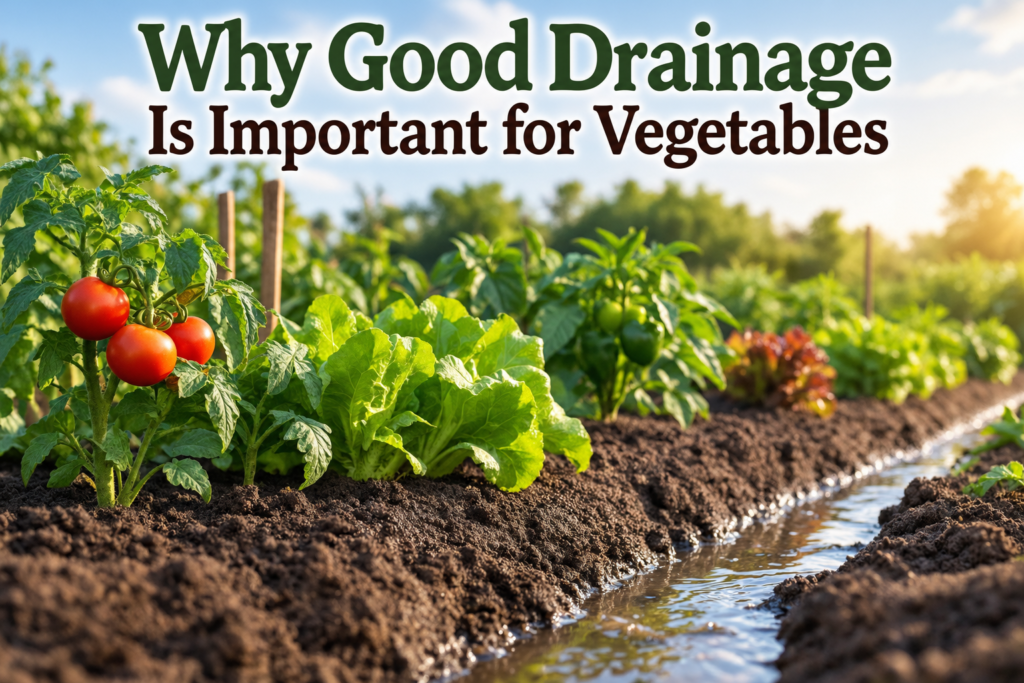
Raised beds can also provide better control over drainage. Another option is creating slightly elevated planting rows so excess water can move away from the root zone.
If water comes from a higher area of your property, you may also need to consider how surface water enters the garden. Redirecting excess water away from planting areas can sometimes make a significant difference.
Drainage Is Important for Different Vegetables
Not every vegetable responds to moisture in exactly the same way. Some vegetables tolerate consistently moist soil better than others, while many common garden vegetables perform poorly when their roots remain saturated.
Root vegetables also require special consideration because the quality and structure of the soil directly affect the underground portion of the plant. Carrots and similar crops need loose soil that allows roots to develop properly.
Tomatoes and peppers can also suffer when their roots remain excessively wet. Providing suitable soil and avoiding excessive irrigation can help maintain healthier growing conditions.
Understanding the general moisture preferences of the vegetables you grow can help you create a more balanced garden.
Good Drainage Saves Time and Effort
One benefit of good drainage that is sometimes overlooked is how much easier it can make garden maintenance.
When soil has suitable structure, watering becomes easier to manage. Plants are less likely to remain surrounded by excessive moisture, and garden beds can recover more quickly after rainfall.
Good drainage can also make it easier to work with the soil. Trying to dig or cultivate extremely wet soil can damage its structure and create more compaction.
For me, prevention is usually easier than constantly trying to correct a drainage problem after vegetables have already started struggling.
Final Thoughts
Good drainage is an essential part of successful vegetable gardening. Plants need water, but they also need oxygen around their roots. The right soil should hold enough moisture for healthy growth while allowing excess water to move away.
If your vegetable garden frequently becomes waterlogged, look at the soil structure, garden layout, watering habits, and elevation of the planting area. Adding organic matter, avoiding compaction, creating raised beds, and improving the movement of surface water can all be useful approaches.
I believe good drainage should be considered before planting rather than after problems appear. A healthy root environment gives vegetables a better foundation for growth and can make everyday gardening much easier.
Whether you are growing vegetables in a backyard garden, raised beds, or containers, paying attention to drainage is one of the simplest ways to create better growing conditions. When water and air are properly balanced in the soil, vegetable plants have a much better environment for developing strong roots, healthy foliage, and productive harvests.