 dolphinshave2stomachs
Related Articles
Growing cucumbers at home is one of the easiest and most rewarding gardening projects, especially if you enjoy fresh vegetables. Cucumbers grow quickly when they receive the right amount of sunlight, water, warmth, and nutrients. You do not need a large garden to grow them successfully. A backyard, raised bed, patio, or large container can all work well.
In my experience, cucumbers are a great vegetable for beginners because you can actually see the plant changing from a small seedling into a productive vine in a relatively short time. Once the plant starts producing flowers and small cucumbers, the garden becomes even more enjoyable.
If you are wondering how to grow cucumbers at home, this guide will take you through the process from choosing seeds to harvesting fresh cucumbers.
Choose the Right Cucumber Variety
The first step is choosing a cucumber variety that suits your growing space and climate. Cucumbers generally grow as either bush types or vining types.
Bush cucumbers are more compact and can be useful for containers or smaller gardens. Vining cucumbers produce longer vines and usually benefit from a trellis or other support.
You should also think about how you plan to use your cucumbers. Some varieties are ideal for fresh eating, while others are better suited for pickling.
When I am choosing seeds, I prefer varieties that match the available space rather than simply choosing based on appearance. A healthy plant that fits your garden is much easier to manage.
Find a Sunny Location
Cucumbers grow best when they receive plenty of sunlight. Choose a location that gets several hours of direct sunlight each day.
A sunny position helps the plants produce strong growth and supports flower and fruit development. If your garden receives very little sunlight, cucumber plants may become weak and produce fewer fruits.
At the same time, extremely hot conditions can place stress on plants. In very hot climates, some afternoon protection can be useful, particularly when temperatures become intense.
Before planting, observe your garden for a few days and identify the areas that receive the most useful sunlight.
Prepare the Soil
Good soil is one of the foundations of a healthy cucumber garden. Cucumbers prefer fertile soil that drains well while still holding enough moisture for the roots.
Before planting, loosen the soil and remove large stones, weeds, and plant debris. Adding mature compost can improve the soil structure and provide organic matter.
I like to prepare the soil before planting rather than trying to correct poor soil after the plants have already started growing. Healthy roots give cucumber plants a much better foundation.
Avoid areas where water remains standing after rain or watering. Cucumber roots need moisture, but constantly saturated soil can create problems.
Plant Cucumber Seeds
Cucumber seeds can be planted directly into the garden once the soil and weather are warm enough. They generally do not enjoy cold conditions, so planting too early can slow germination.
Make a small hole in the prepared soil and plant the seeds according to the instructions on the seed packet. Cover them gently with soil and water carefully.
You can also start cucumber seeds indoors if your local growing season makes this useful. However, cucumber seedlings can be sensitive when transplanted, so handle the roots carefully.
For many home gardeners, direct sowing is a simple option when outdoor conditions are suitable.
Give Cucumbers Enough Space
Spacing is important because cucumber plants can spread quickly. Crowded plants may have reduced airflow and can become more difficult to water, inspect, and harvest.
The exact spacing depends on the variety you choose. Always check the seed packet for specific recommendations.
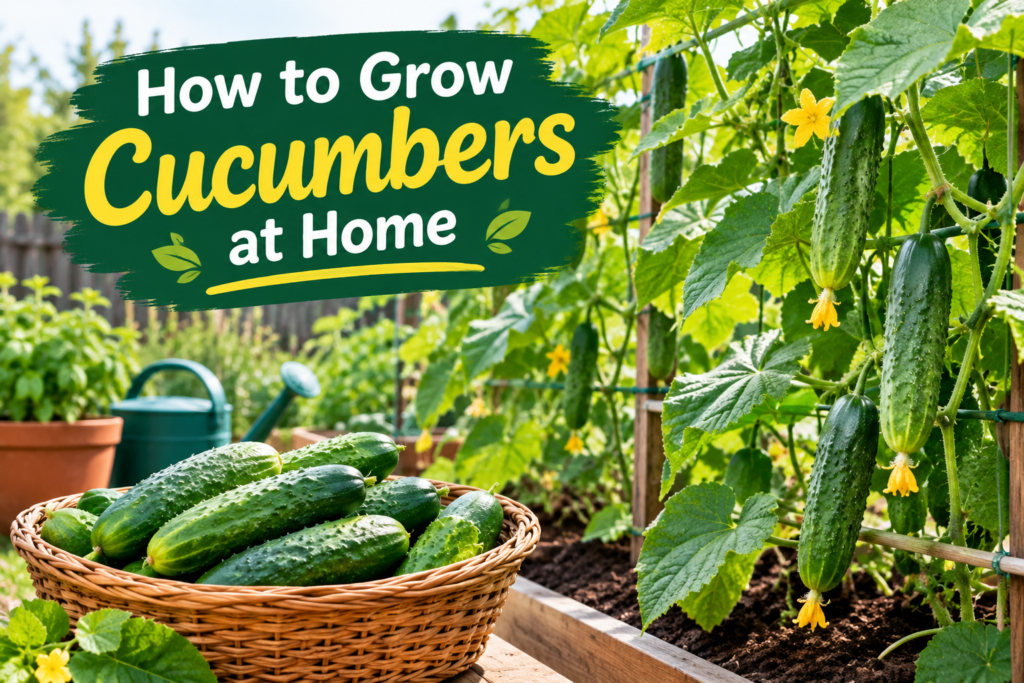
If you are growing vining cucumbers, using a trellis can make a major difference. Instead of allowing the vines to spread across the ground, you can encourage them to climb.
This saves garden space and can also make the cucumbers easier to find when harvesting.
Use a Trellis for Vining Cucumbers
A trellis is one of my favorite ways to grow cucumbers at home. Cucumber vines naturally want to climb, so giving them support allows you to make better use of vertical space.
You can use a garden trellis, strong netting, or another suitable support structure. Install the support early so you do not have to disturb established roots later.
As the vines grow, gently guide them toward the support. Avoid handling the stems roughly because young vines can be delicate.
Growing cucumbers vertically can also help keep the fruit away from the soil, making harvesting easier and improving airflow around the foliage.
Water Cucumbers Properly
Consistent watering is very important when growing cucumbers. The plants contain a large amount of water, so they need a reliable moisture supply during active growth and fruit production.
Water deeply enough to moisten the root area, while allowing excess water to drain away. During hot and dry weather, you may need to water more frequently.
Try to water the soil around the base of the plant instead of constantly soaking the leaves. Morning watering is often a convenient option because the plants have time to absorb moisture during the day.
Do not rely only on a fixed watering schedule. Check the soil and consider the weather before deciding when your plants need water.
Mulch Around the Plants
Mulching can be very helpful for cucumber plants, particularly during hot weather. A layer of suitable organic mulch can help the soil retain moisture and reduce weed growth.
Mulch can also help protect the roots from sudden changes in soil temperature.
Keep the mulch slightly away from the main stem of the plant. This allows air to circulate around the stem and prevents excessive moisture from collecting directly against it.
Feed Your Cucumber Plants
Cucumbers are productive plants, so they benefit from fertile soil and appropriate nutrition.
If you prepared the soil with compost before planting, your plants may already have a good foundation. As they grow, you can use a suitable vegetable fertilizer according to its label instructions.
Avoid applying excessive fertilizer. Too much nitrogen can encourage lots of leafy growth while not necessarily giving you the fruit production you want.
I prefer to focus on healthy soil first and use fertilizer as a supplement rather than relying on fertilizer alone.
Watch for Flowers and Pollination
Once cucumber plants become established, you will start seeing yellow flowers. These flowers are an important part of the fruit production process.
Many cucumber varieties depend on pollinators to transfer pollen between flowers. Bees and other insects can play an important role in this process.
Growing flowering plants nearby can help create a more welcoming environment for pollinators.
If your plants produce flowers but very few cucumbers develop, poor pollination can sometimes be one possible reason. Other factors, including temperature, plant stress, and variety, can also affect fruit production.
Protect Plants From Common Problems
Cucumber plants can experience problems caused by insects, diseases, poor watering, and stressful weather.
Inspect your plants regularly. Look underneath leaves as well as on top because some pests can hide in less visible areas.
Remove badly damaged leaves when appropriate and keep the growing area reasonably clean. Good airflow around plants can also help reduce conditions that encourage certain diseases.
Avoid watering excessively and do not leave dead plant material around the garden.
If you notice an unusual problem, identify it before applying any treatment. Different problems require different solutions, and unnecessary treatments should be avoided.
When to Harvest Cucumbers
One of the most enjoyable parts of growing cucumbers at home is harvesting them yourself.
The best harvesting size depends on the variety and how you plan to use the cucumber. In general, cucumbers are often best when harvested while they are still young and tender.
Check your plants regularly because cucumbers can grow surprisingly quickly during warm weather. Leaving mature fruits on the plant for too long can affect their texture and may reduce continued production.
Use clean scissors or a garden tool to cut the cucumber from the vine rather than pulling aggressively.
Regular harvesting can encourage the plant to keep producing when growing conditions remain favorable.
Growing Cucumbers in Containers
You can successfully grow cucumbers in containers if you choose a suitable variety and provide enough space.
Use a large container with good drainage. Fill it with quality growing medium and place it somewhere that receives plenty of sunlight.
Container grown cucumbers often need closer attention to watering because containers can dry out faster than garden soil.
A small trellis can also be added to support vining varieties. This allows the plant to grow upward rather than taking over your patio or balcony.
For beginners with limited garden space, container cucumber growing can be a practical way to start.
Common Mistakes to Avoid
One common mistake is planting cucumbers before the weather and soil are warm enough. Another is allowing the plants to become too dry during hot weather.
Poor spacing is another issue. Giving cucumber plants enough room makes maintenance much easier.
Some gardeners also wait too long before installing support. If you plan to grow vines vertically, put the trellis in place early.
Finally, do not forget to harvest regularly. Checking your plants every few days can help you catch mature cucumbers before they become oversized.
Final Thoughts
Learning how to grow cucumbers at home does not have to be complicated. Start with good seeds, prepare fertile soil, choose a sunny location, provide consistent moisture, and give vining plants suitable support.
From my point of view, the biggest advantage of growing cucumbers yourself is being able to enjoy fresh produce straight from your garden. You also learn something with every growing season. If one method does not work perfectly, you can adjust your watering, spacing, variety, or planting time next season.
With a little patience and regular care, even a beginner can create a productive cucumber garden and enjoy fresh cucumbers throughout the growing season.