 dolphinshave2stomachs
Related Articles
Growing vegetables at home can be a very rewarding experience, but watering them correctly is one of the most important parts of gardening. In my experience, many gardeners focus so much on giving plants enough water that they sometimes forget that too much water can also create problems. Vegetable plants need water to grow, but their roots also need access to air. When the soil stays wet for too long, the roots can become weak and unhealthy.
Learning the signs you are overwatering vegetable plants can help you correct the problem before your crops suffer serious damage. Some symptoms can look similar to underwatering, nutrient problems, or plant diseases, so it is important to look at the soil and the overall condition of the plant before adding more water.
The Soil Stays Wet for Too Long
One of the easiest signs of overwatering vegetable plants is soil that remains wet for several days. Healthy garden soil should hold moisture while still allowing excess water to drain away.
If you touch the soil and it feels constantly soggy, especially several inches below the surface, your plants may be receiving too much water. This is particularly common when gardeners follow a strict watering schedule instead of checking the actual moisture level of the soil.
I prefer checking the soil before watering because weather conditions can change quickly. A cool or cloudy day usually means plants may need less water than they would during hot and sunny weather.
Yellowing Leaves
Yellow leaves are another common sign of overwatering. When roots stay in waterlogged soil, they can struggle to absorb nutrients properly. As a result, the leaves may begin turning yellow.
Yellowing can occur for several different reasons, including nutrient deficiencies, natural aging, pests, and diseases. However, if the leaves are turning yellow while the soil is consistently wet, overwatering should be considered.
The location of the yellow leaves can also provide useful information. If older leaves are becoming yellow and the plant is growing poorly while the soil stays wet, excessive moisture may be contributing to the problem.
Wilting Even Though the Soil Is Wet
This can be one of the most confusing signs for gardeners. A plant may look wilted even though there is plenty of moisture in the soil.
The reason is that waterlogged soil can damage or stress the roots. When roots are unhealthy, they may not function properly, which can prevent the plant from taking up water and nutrients efficiently.
This means adding even more water can make the situation worse. If a wilted vegetable plant has wet soil, check the soil condition before watering again.
Soft or Weak Stems
Healthy vegetable plants usually develop firm stems that can support their leaves and fruit. When plants are consistently overwatered, growth can become weak and soft.
Young seedlings are especially sensitive to excessive moisture. Their small root systems can become stressed quickly when the soil does not drain properly.
If you notice that your vegetable plants are becoming unusually weak, falling over, or developing soft stems, check the moisture level and drainage around the roots.
Root Problems
The roots are often where the real damage from overwatering begins. Roots need oxygen as well as moisture. When soil remains saturated, the spaces that normally contain air can become filled with water.
This can create an unhealthy environment for the roots. Damaged roots may become brown, soft, or unpleasant smelling instead of being firm and healthy.
If you remove a plant from its container or carefully inspect the roots of a struggling plant, root condition can help you understand what is happening beneath the soil.
Mold or Algae on the Soil
Another sign of excessive moisture is the appearance of mold, algae, or a green layer on the surface of the soil.
A small amount of surface growth does not always mean that your vegetable plants are being seriously damaged. However, it can indicate that the soil is staying moist for too long and that there is limited airflow.
If the soil surface remains wet and develops mold or algae regularly, consider reducing watering and improving drainage.
Fungus Problems Become More Common
Excess moisture can create conditions that encourage various fungal problems. Constantly wet soil and wet foliage can make vegetable gardens more vulnerable to certain diseases.
This is one reason I prefer watering the soil around the base of plants instead of frequently wetting the leaves. Good spacing between plants can also improve air movement.
If you repeatedly see disease symptoms despite good garden hygiene, examine your watering habits as well.
Slow Plant Growth
Overwatering does not always cause immediate dramatic damage. Sometimes the first noticeable problem is simply slow growth.
A plant that receives too much water may have stressed roots and reduced nutrient uptake. Even though the soil appears rich and moist, the plant may not grow as expected.
If your vegetable plants are receiving enough sunlight and suitable nutrients but remain small and weak, check whether the soil is staying excessively wet.
Leaves May Look Pale or Droopy
Overwatered plants can develop leaves that appear pale, dull, or droopy. Healthy leaves usually have a stronger appearance and good firmness, although this varies between vegetable varieties.
Drooping leaves can easily make gardeners think the plant needs more water. Before reaching for the watering can, I recommend checking the soil with your finger.
If the soil is already moist, give the roots time to receive more oxygen before watering again.
Water Pools Around the Plants
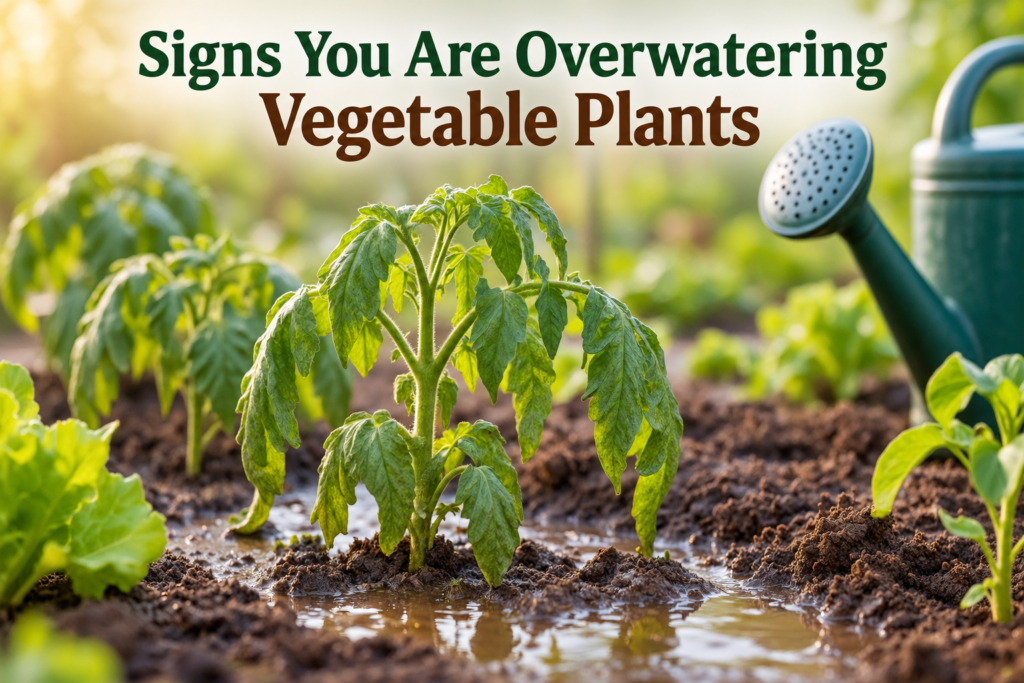
Standing water is a clear warning sign. If water collects around your vegetable plants after irrigation and remains there for an extended period, the soil may have drainage problems.
This can happen in heavy clay soil, compacted garden beds, or containers without adequate drainage holes.
Good drainage is just as important as watering itself. Plants need moisture, but excess water needs somewhere to go.
How to Check if You Are Overwatering
You do not always need special gardening equipment to check soil moisture. One simple method is to push your finger into the soil.
If the top few inches are still noticeably wet, wait before watering again. For larger vegetable plants, checking deeper into the root zone can provide a better idea of the available moisture.
You can also observe the weight of container plants. A container that feels unusually heavy may still contain a significant amount of water.
Most importantly, avoid watering simply because it is part of your daily routine. Plants do not always need the same amount of water every day.
How to Fix an Overwatered Vegetable Plant
The first step is to stop adding water until the soil begins to dry to an appropriate level. Do not allow the plant to become extremely dry, but give the root zone an opportunity to recover.
Next, check drainage. Make sure containers have drainage holes and that excess water can escape freely. In garden beds, compacted soil may need improvement with suitable organic matter.
If the problem is caused by heavy rainfall, temporary protection from additional water may help container plants and some smaller crops.
Remove badly damaged leaves when appropriate, but avoid removing healthy foliage unnecessarily. The plant needs its leaves to produce energy while it recovers.
How to Prevent Overwatering Vegetable Plants
Prevention is easier than trying to save a plant that has already suffered serious root damage. One of the best habits is to check the soil before watering.
Water deeply when needed rather than giving small amounts of water repeatedly throughout the day. Deep watering can encourage roots to develop through the available soil while allowing the surface to dry between watering sessions.
Mulching can also help maintain more stable soil moisture. However, avoid piling mulch directly against the stems of vegetable plants.
Choose containers with proper drainage and avoid placing them where excess water cannot escape. Raised garden beds can also help gardeners manage drainage in areas with heavy or compacted soil.
Weather should also influence your watering routine. After substantial rainfall, your garden may not need additional irrigation for some time.
Do Not Confuse Overwatering With Underwatering
One of the biggest mistakes I see in gardening is assuming every wilted plant needs more water. Both overwatering and underwatering can cause wilting.
The easiest way to tell them apart is to check the soil. Dry, dusty soil suggests the plant may need water, while wet and heavy soil suggests that additional water may not be helpful.
Looking at several symptoms together is much more reliable than focusing on one symptom alone.
Final Thoughts
Knowing the signs you are overwatering vegetable plants can make a major difference in the health of your garden. Yellow leaves, constantly wet soil, wilting despite moisture, weak stems, poor growth, mold, standing water, and root problems can all point toward excessive moisture.
From my point of view, the most useful gardening habit is simply to pay attention to the soil instead of following a fixed watering schedule. Every garden is different, and water needs can change depending on temperature, rainfall, soil type, plant size, container size, and sunlight.
Vegetable plants need consistent moisture, but they also need healthy roots and good drainage. By learning to recognize the signs of overwatering and adjusting your watering routine when necessary, you can create better growing conditions and give your vegetables a stronger opportunity to produce healthy leaves, flowers, and crops.