 dolphinshave2stomachs
Related Articles

When I notice vegetable leaves curling up in my garden, my first thought is usually that the plant is trying to tell me something is wrong. Curling leaves are one of the most common problems gardeners notice, but the cause is not always the same. Sometimes the plant simply needs more consistent water, while in other cases pests, heat, disease, or growing conditions may be responsible.
The good thing is that curled leaves do not always mean the plant is dying. In many situations, identifying the cause early can help the plant recover and continue producing healthy vegetables. I have found that the best approach is to look at the leaves carefully and consider what has changed around the plant.
In this article, I will explain the common reasons why vegetable leaves curl up and what you can do to help your plants grow normally again.
What Does Leaf Curling Look Like?
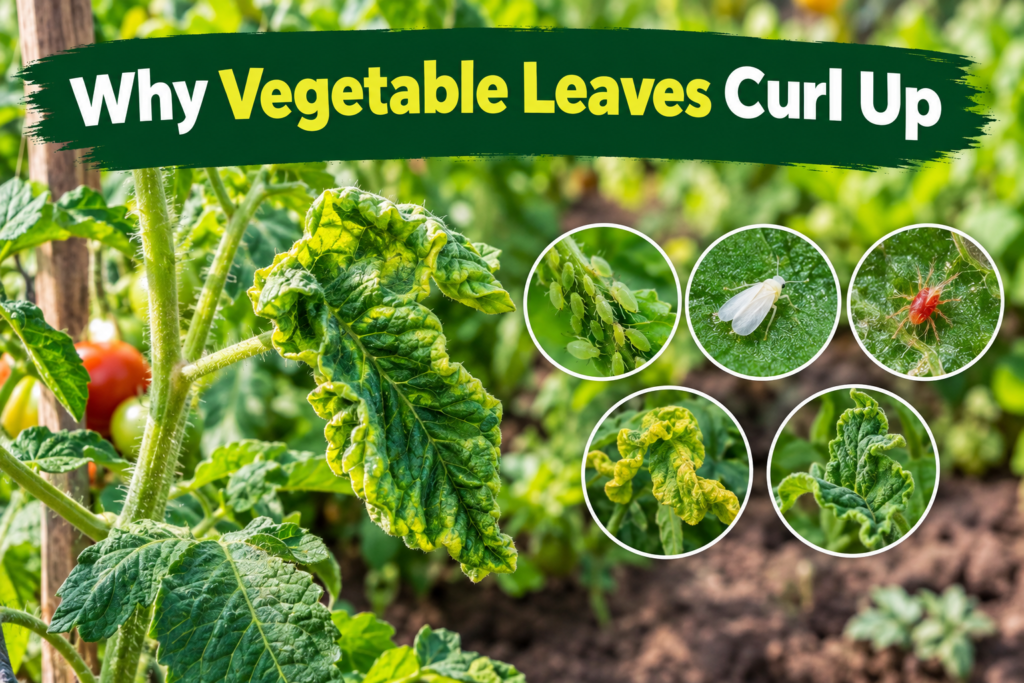
Leaf curling can appear in several different ways. Some leaves curl upward along the edges, while others curl downward. Young leaves may become twisted, folded, narrow, or distorted.
Sometimes the leaves remain green and healthy looking apart from the curling. In other cases, curled leaves may also become yellow, dry, spotted, or sticky.
The direction and appearance of the curl can provide useful clues. However, I do not recommend identifying the problem from leaf shape alone. It is better to inspect the entire plant and its growing conditions before deciding what is happening.
1. Lack of Water
One of the first things I check when vegetable leaves curl up is the moisture level around the roots. When a plant does not receive enough water, it may curl its leaves to reduce moisture loss.
Plants growing in containers can be particularly vulnerable because their soil can dry out faster than garden soil. Young plants and vegetables growing during hot weather may also need more frequent watering.
If the soil feels very dry several centimeters below the surface and the plant looks wilted or stressed, insufficient water could be the reason.
I prefer watering deeply rather than giving the plant a small amount of water every day. Deep watering encourages moisture to reach the root zone. The exact watering schedule depends on the vegetable, soil, weather, and container size.
2. Too Much Water
Interestingly, too much water can also lead to curled vegetable leaves.
When soil remains constantly wet, plant roots may struggle to get enough oxygen. Poor drainage can eventually weaken the roots and affect the plant’s ability to take up water and nutrients.
If the soil is consistently soggy and the leaves are curling, yellowing, or becoming weak, I would check the drainage before adding more water.
For container vegetables, make sure the container has suitable drainage holes. In garden beds, improving soil structure and avoiding unnecessary watering can help.
The goal is not simply to give plants more water. The goal is to maintain balanced soil moisture.
3. Hot Weather
High temperatures are another common reason vegetable leaves curl. During very hot weather, plants can lose water through their leaves faster than their roots can replace it.
Tomatoes, peppers, beans, and several other vegetables may curl their leaves during periods of intense heat.
In some cases, the leaves may curl while remaining green. If the plant looks normal again during cooler parts of the day, heat stress may be responsible.
Providing consistent soil moisture and using mulch around the base of plants can help keep the root zone cooler and reduce moisture loss. During extreme heat, temporary shade can also protect sensitive vegetables.
4. Too Much Sun or Sudden Environmental Changes
Vegetable plants can sometimes respond to sudden changes in their environment. A plant moved from a sheltered location into strong sunlight may experience stress while adjusting.
Seedlings are especially sensitive to sudden changes in temperature, sunlight, wind, and moisture.
When I transplant young vegetables, I try to give them time to adjust to outdoor conditions. Gradual exposure to stronger sunlight can reduce transplant stress.
If leaf curling begins shortly after transplanting, I look at the overall plant condition before assuming there is a pest or disease problem.
5. Aphids
Aphids are tiny insects that can cause noticeable leaf curling. They feed on plant sap, especially around young shoots and tender leaves.
When aphids feed heavily, new leaves may become curled, distorted, or twisted. The insects can often be found on the underside of leaves or around new growth.
I also look for sticky material on the leaves because aphids produce honeydew while feeding. Ants may sometimes be present around plants with aphid infestations as well.
If you suspect aphids, inspect new growth carefully. Removing small populations with a strong stream of water can sometimes help. Beneficial insects such as lady beetles and lacewings can also feed on aphids.
6. Whiteflies
Whiteflies are another pest that can contribute to curled and weakened leaves. They are very small and usually gather on the underside of leaves.
When the plant is disturbed, adult whiteflies may fly away in a small cloud.
Whiteflies feed by sucking plant juices. Heavy feeding can cause yellowing, weak growth, and leaf distortion.
I recommend checking the underside of leaves regularly, especially on tomatoes, peppers, beans, and other vegetables that commonly attract these pests.
Yellow sticky traps can be useful for monitoring adult whiteflies, while water sprays may help reduce small populations.
7. Spider Mites
Spider mites can also cause leaves to curl, especially during hot and dry weather. These pests are extremely small, so their damage is often easier to see than the mites themselves.
Affected leaves may develop tiny pale spots, a dusty appearance, or yellowing. Fine webbing may become visible when the infestation is more advanced.
If I notice unusual curling combined with tiny speckles on leaves, I inspect the underside carefully.
Keeping plants adequately watered and reducing excessive dust around the foliage can help create better growing conditions. A gentle water spray can also remove some mites from the plant.
8. Nutrient Problems
Nutrient deficiencies can sometimes cause leaf curling, but I would not automatically assume that curled leaves mean the plant needs fertilizer.
Different nutrient problems create different symptoms. Leaves may curl, become pale, develop unusual colors, or show changes in growth depending on the nutrient involved.
Poor soil conditions can make it difficult for plants to obtain nutrients even when those nutrients are present.
Before adding fertilizer, I prefer to consider the plant’s overall condition, soil quality, watering pattern, and recent weather. Adding too much fertilizer can create additional problems and may damage plant roots.
A soil test can be useful when nutrient problems are suspected, particularly when symptoms continue despite good watering and growing conditions.
9. Herbicide Exposure
Accidental exposure to herbicides can cause serious leaf distortion and curling. This can happen when weed control products drift from nearby areas or are used incorrectly around vegetable plants.
New growth may appear twisted, narrow, or unusually shaped. Several plants in the same area may show similar symptoms.
If curling appears suddenly across multiple plants after weed control work nearby, I consider chemical exposure as a possible cause.
To protect vegetables, it is important to follow product labels carefully and avoid using products that are not appropriate around edible crops.
10. Plant Viruses
Some plant viruses can cause severe leaf curling, yellowing, mottling, or distortion. Viruses can be spread by insects such as aphids and whiteflies or through infected plant material.
Viral problems can be difficult to manage because there is generally no simple treatment that makes an infected plant healthy again.
If new leaves continue to develop severe distortion while the plant shows other unusual symptoms, I take the possibility of disease seriously.
Removing badly infected plants may sometimes help reduce the opportunity for certain diseases to spread, depending on the specific disease involved. Good garden hygiene and pest management can also reduce disease pressure.
How to Find the Real Cause of Curling Leaves
When I see curled leaves, I try not to react immediately. Instead, I work through a simple inspection.
First, I check the soil. Is it very dry, or is it constantly wet?
Next, I examine the leaves closely. I look underneath them for aphids, whiteflies, mites, eggs, or other insects.
Then I check the weather. Has there been unusually hot weather, strong wind, heavy rain, or a sudden change in temperature?
I also look at the newest leaves. New growth that is severely distorted may provide different clues from older leaves that simply curl during hot weather.
Finally, I look at the whole plant. If the plant is growing well and producing healthy new leaves, the problem may be temporary. If growth is slowing and new leaves continue to become distorted, the plant needs closer attention.
How to Prevent Vegetable Leaves From Curling
Prevention starts with healthy growing conditions. I focus on consistent watering, good soil drainage, adequate sunlight, and regular plant inspection.
Mulching around plants can help maintain more consistent soil moisture and reduce temperature changes around the roots. However, mulch should not be piled directly against plant stems.
I also try to avoid overcrowding vegetables because good air circulation can help reduce some disease problems.
Regular pest inspection is another habit that I find very useful. Finding a few aphids is much easier to manage than dealing with a large infestation.
When planting vegetables, choosing varieties that are suitable for the local growing conditions can also make a difference.
Should You Remove Curled Leaves?
Not every curled leaf needs to be removed. If the leaf is still green and the plant is otherwise healthy, I usually leave it alone while correcting the underlying problem.
Removing leaves can sometimes create additional stress if too much healthy foliage is removed.
However, leaves that are severely damaged, diseased, or no longer contributing to the plant may need to be removed depending on the situation.
The important thing is to identify why the leaves are curling before removing large amounts of foliage.
Final Thoughts
Vegetable leaves can curl up for many different reasons, and the appearance of the leaf is only one part of the puzzle. Water stress, excessive moisture, hot weather, pests, nutrient problems, chemical exposure, and plant diseases can all contribute to leaf curling.
From my experience, regular observation is one of the best tools a gardener can have. Instead of immediately reaching for fertilizer or pest control products, I recommend checking the soil, inspecting the leaves, observing the weather, and looking closely at new growth.
Once you understand what is causing the problem, it becomes much easier to choose an appropriate solution.
A few curled leaves do not necessarily mean your vegetable plant is in serious trouble. With good watering habits, healthy soil, regular pest checks, and proper garden care, many plants can recover and continue producing healthy growth.