 dolphinshave2stomachs
Related Articles
Growing vegetables in cool weather can be one of the most enjoyable parts of gardening. I personally find cool weather gardening easier in many ways because plants do not have to deal with the intense heat that can make summer gardening difficult. Many vegetables actually grow better when temperatures are mild, and some even develop better flavor when grown during cooler months.
If you are planning a vegetable garden for early spring, fall, or another cool season, choosing the right crops is very important. Not every vegetable can handle lower temperatures, but there are plenty of options that can produce a healthy and useful harvest.
In this guide, I will share some of the best vegetables to grow in cool weather, along with simple growing tips that can help beginners get better results.
Why Grow Vegetables in Cool Weather?
Cool weather vegetables are generally crops that prefer mild temperatures instead of extreme heat. They can often be planted in early spring or late summer for a fall harvest, depending on your local climate.
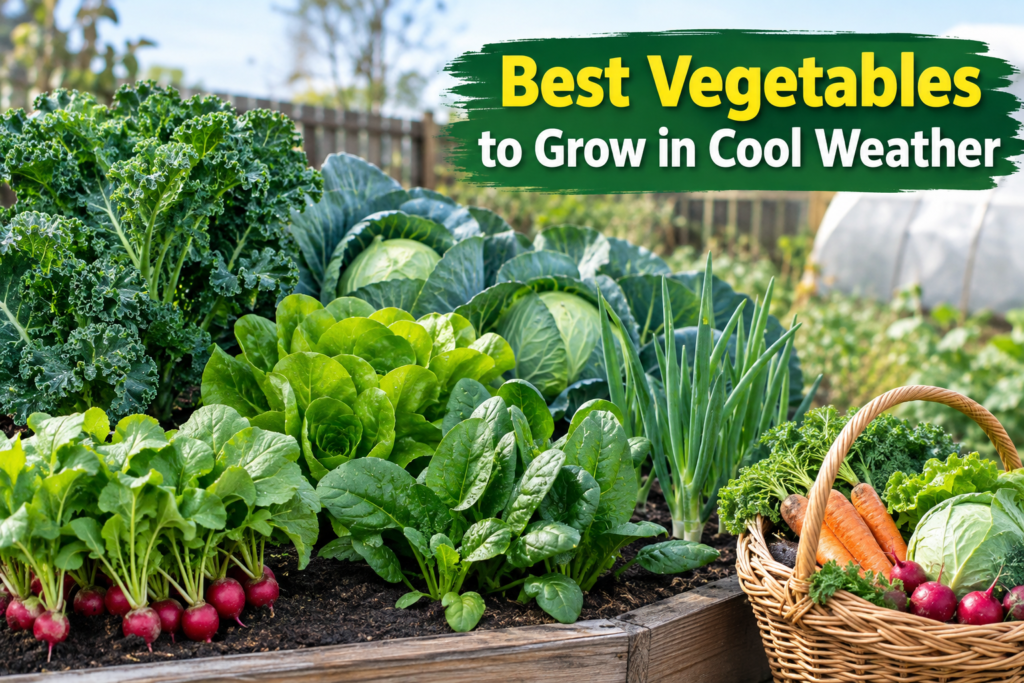
One thing I like about cool season gardening is that plants often need less protection from heat stress. Lettuce, spinach, radishes, carrots, peas, kale, broccoli, and cabbage are just a few examples.
Cool weather can also improve the taste of certain vegetables. Leafy greens may become more pleasant and crisp, while root vegetables can develop a sweeter flavor when grown under suitable cool conditions.
Before planting, I always recommend checking your local temperatures because the ideal planting time can vary considerably from one region to another.
1. Spinach
Spinach is one of my favorite vegetables for cool weather gardening. It grows quickly and does not require a lot of space, which makes it suitable for containers, raised beds, and traditional garden plots.
Spinach prefers cool conditions and can struggle when temperatures become too hot. When the weather is mild, the leaves can remain tender and productive.
Plant spinach in fertile, well drained soil and provide it with regular moisture. Harvesting the outer leaves allows the plant to continue producing new growth.
For beginners, spinach is a practical choice because you can harvest small amounts instead of waiting for the entire plant to mature.
2. Lettuce
Lettuce is another excellent cool weather vegetable. It grows well during mild conditions and is particularly useful for gardeners who want a quick harvest.
There are many lettuce varieties, including leaf lettuce, romaine, and butterhead types. Leaf lettuce is especially convenient because you can harvest individual leaves as the plant grows.
I prefer growing lettuce where it receives plenty of sunlight but is protected from excessive heat. Keep the soil consistently moist without making it waterlogged.
If you plant lettuce in succession, you can enjoy fresh leaves over a longer period instead of having everything ready at the same time.
3. Radishes
If you want a vegetable that grows quickly, radishes are hard to ignore. They are among the best vegetables to grow in cool weather because they can mature relatively fast.
Radishes grow best in loose soil that allows their roots to develop properly. Compacted soil can cause misshapen roots, so preparing the planting area is worth the effort.
I like radishes because they are also suitable for beginners. You can sow seeds directly into the garden and usually do not need to wait a long time before checking the roots.
Planting small batches every couple of weeks can provide a continuous harvest.
4. Carrots
Carrots are excellent cool season root vegetables. They can take longer than radishes to mature, but the wait can be worthwhile.
The most important thing I have learned about growing carrots is that soil preparation matters. Carrot roots need loose soil so they can grow downward without encountering too many obstacles.
Keep the soil evenly moist during germination. Once the plants become established, continue providing appropriate moisture and remove weeds that compete for nutrients.
Carrots can be grown in garden beds or deep containers, making them useful even if you have limited gardening space.
5. Peas
Peas are another popular vegetable for cool weather. They generally prefer mild temperatures and can be grown in many home gardens.
There are different types of peas, including garden peas, snow peas, and snap peas. Some varieties require support, so it is a good idea to provide a trellis or similar structure when necessary.
I recommend keeping the soil reasonably moist and giving pea plants enough sunlight. Harvesting pods regularly can encourage continued production.
Freshly picked peas can taste noticeably different from peas that have been stored for a long time, which is one reason I enjoy growing them at home.
6. Kale
Kale is one of the most dependable leafy vegetables for cool weather gardening. It can tolerate cooler conditions and often remains productive when some warm season vegetables stop performing well.
There are several varieties with different leaf shapes and colors. Kale can be harvested gradually by removing mature outer leaves.
I find kale particularly useful for gardeners who want a vegetable that provides repeated harvests rather than a single large harvest.
Give kale fertile soil, adequate sunlight, and consistent moisture. Watch for common garden pests and inspect the leaves regularly.
7. Broccoli
Broccoli is a classic cool season crop, although it requires more space and attention than some quick growing vegetables.
Broccoli generally performs best when temperatures are mild. Excessive heat can affect head development and overall plant performance.
I recommend starting with healthy transplants if you want to make the process easier. Choose a sunny location with fertile soil and provide consistent watering.
Once the main head is harvested, some varieties can produce smaller side shoots. This can extend the harvest and make the plant even more useful.
8. Cabbage
Cabbage is another vegetable that performs well during cool growing periods. It is available in many varieties, so gardeners can choose based on their preferred size and harvest time.
Cabbage needs fertile soil and regular moisture. Give plants enough space because mature heads can become surprisingly large.
One mistake beginners sometimes make is planting cabbage without considering pests. Caterpillars and other insects can damage the leaves, so checking plants regularly is important.
With proper care, cabbage can provide a substantial harvest for home cooking.
9. Turnips
Turnips are underrated vegetables that deserve a place in a cool weather garden. Both their roots and young greens can be useful in the kitchen.
They generally grow well in mild conditions and can mature relatively quickly compared with some larger root crops.
Prepare loose soil before sowing and keep the planting area free from heavy weed competition. Harvesting at the right size is also important because younger turnips can have a more tender texture.
If you have never grown turnips before, they are worth trying because they do not require complicated gardening techniques.
10. Swiss Chard
Swiss chard is a useful leafy vegetable that can grow during mild weather. It is also attractive, especially varieties with colorful stems.
Although chard can tolerate a wider range of conditions than some other leafy greens, moderate temperatures can help it produce healthy leaves.
Harvest the outside leaves as needed and allow the younger leaves in the center to continue growing.
I like Swiss chard because it can provide repeated harvests from the same plant when it is maintained properly.
11. Onions
Onions can also be included in a cool weather vegetable garden, depending on the variety and local climate.
Growing onions requires patience because some varieties take a considerable amount of time to form mature bulbs. Green onions, however, can be harvested much earlier.
Good soil drainage is important because constantly wet conditions can create problems for the roots and bulbs.
For beginners, green onions can be an easier starting point because they require less space and can be harvested while still young.
Tips for Growing Vegetables in Cool Weather
Choosing the right vegetables is only part of successful cool season gardening. I have found that simple preparation can make a big difference.
Choose the Right Planting Time
Do not rely only on the calendar. Pay attention to your local weather and expected temperatures. Different regions can have very different cool seasons.
Prepare Healthy Soil
Most vegetables perform better in fertile, well drained soil. Adding suitable organic matter can improve soil structure and help provide nutrients.
Give Plants Enough Sunlight
Cool weather does not mean plants can grow without sunlight. Most vegetables still need several hours of good sunlight each day.
Avoid Overwatering
Cool weather can reduce evaporation, meaning soil may stay wet longer. Check the soil before watering instead of following a fixed schedule.
Protect Young Plants
Young seedlings can be more sensitive to sudden temperature changes. Depending on your climate, simple protection such as row covers or a small greenhouse can help.
Watch for Pests
Cool weather does not mean your garden will be completely free from pests. Check leaves regularly and deal with problems early.
Final Thoughts
Growing vegetables in cool weather is a great way to make better use of your garden throughout the year. Vegetables such as spinach, lettuce, radishes, carrots, peas, kale, broccoli, cabbage, turnips, Swiss chard, and onions can all be useful choices depending on your local climate and planting schedule.
In my experience, the key is not to make gardening unnecessarily complicated. Start with a few vegetables that match your weather conditions, prepare the soil properly, provide enough sunlight and moisture, and observe how your plants respond.
If you are new to cool season gardening, I would start with fast growing crops such as radishes, lettuce, and spinach. Once you become comfortable with them, you can experiment with larger crops such as broccoli, cabbage, carrots, and peas.
The best vegetable garden is not necessarily the biggest one. A small garden with healthy plants and regular harvests can be much more rewarding than a large garden that becomes difficult to manage. With the right vegetables and a little patience, cool weather can become one of the most productive seasons in your garden.