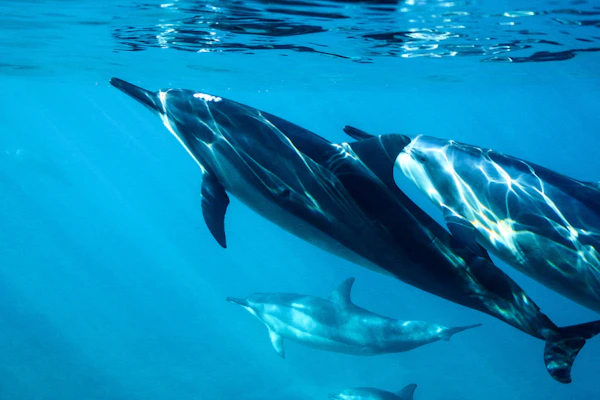
Few rivalries in the animal kingdom are as storied as the relationship between dolphins and sharks. Sharks are ancient, powerful, and rightfully respected as apex predators — but dolphins are not helpless prey. The relationship between these two groups of marine animals is far more complex, and the outcome of any encounter is far less predictable, than popular culture suggests.
The reality is that dolphins and sharks have coexisted in the ocean for millions of years, and over that time, dolphins have developed remarkably effective strategies for defending themselves against shark attacks — strategies that, in many cases, turn the tables on one of the ocean's most formidable predators.
Dolphins Are Not Easy Prey
The first thing to understand is that dolphins are not passive victims in encounters with sharks. They are fast, agile, highly intelligent, and — crucially — they don't fight alone. A single adult bottlenose dolphin can reach speeds of up to 35 km/h in short bursts, with a hard, powerful rostrum (beak) that can deliver devastating blows. But the real dolphin advantage comes from their social structure.
Dolphins live in pods, and when a shark threatens one member, the group responds collectively. Multiple dolphins will position themselves around the shark, taking turns ramming it with their rostrums. The dolphin's rostrum is not a soft nose — it's a solid, bone-reinforced structure capable of delivering enough force to rupture a shark's internal organs. Documented cases exist of dolphin pods killing sharks through sustained ramming attacks.
The Dolphin's Key Advantages
- Speed and maneuverability: Dolphins are generally faster than most sharks and far more agile. They can change direction instantly, making them difficult to bite.
- Intelligence: Dolphins appear to assess shark behavior and respond strategically, not just reactively. They can predict a shark's movements and position themselves advantageously.
- Group tactics: A lone dolphin vs. a large shark is a dangerous situation. A pod of dolphins vs. a shark is a very different equation.
- The rostrum weapon: The dolphin's hard beak, driven by powerful neck muscles, can cause serious injury when it strikes a shark's sensitive gills, belly, or snout.
- Echolocation awareness: Dolphins can detect approaching sharks from much further away than sharks can detect them visually.
The Shark's Key Advantages
- Ambush ability: Large sharks like great whites attack from below at high speed — a strike that can incapacitate or kill a dolphin before the pod can respond.
- Size: A large great white shark (5+ meters, 1,000+ kg) massively outweighs any dolphin. Raw physical power matters.
- Bite force: A great white shark's bite exerts thousands of pounds of force — a successful bite can be immediately fatal.
- Isolation opportunity: Sharks preferentially target isolated dolphins — calves, injured animals, or individuals separated from the group.
| Factor | Dolphin | Shark |
|---|---|---|
| Speed | Up to 35 km/h | Up to 45 km/h (great white) |
| Intelligence | Very high | Low-moderate |
| Group tactics | Yes — coordinated | No — solitary |
| Attack style | Sustained ramming | Ambush bite |
| Preferred prey | Fish, squid | Marine mammals, fish |
Who Typically Wins?
The answer depends heavily on context. In a direct confrontation between a healthy adult dolphin pod and a single shark, the dolphins most often win or successfully drive the shark away. There are documented instances of dolphin pods killing tigers sharks and even juvenile great white sharks through coordinated ramming attacks.
However, a large great white shark attacking a lone dolphin from below — a true ambush — is a very different scenario. The size, speed, and strike force of a large great white gives it a significant advantage in a surprise attack, and a single decisive bite can be immediately fatal before the pod can intervene.
Do Dolphins Actually Protect Humans From Sharks?
There are numerous documented and credible accounts of dolphins placing themselves between humans and sharks, apparently protecting the humans. In 2004, a group of lifeguards in New Zealand were surrounded by a pod of bottlenose dolphins that herded them into a tight group and swam circles around them. When the swimmers tried to leave the group, the dolphins pushed them back. Moments later, a great white shark was spotted nearby.
Scientists are cautious about interpreting such events as deliberate altruism — it's possible the dolphins were responding to the shark threat to their own group and the humans happened to benefit. But the behavior is real, and there are enough credible accounts to take seriously the possibility that dolphins sometimes extend their protective group behavior to other species.
Conclusion: Mutual Respect in the Ocean
The dolphin-shark relationship is best understood not as predator versus prey, but as two groups of highly evolved marine animals that have been navigating coexistence for millions of years. Sharks do occasionally kill dolphins — especially isolated individuals or calves. Dolphins do occasionally kill sharks — especially when defending the pod. In between, most encounters result in no combat at all, just mutual avoidance by animals that have learned each other's capabilities.