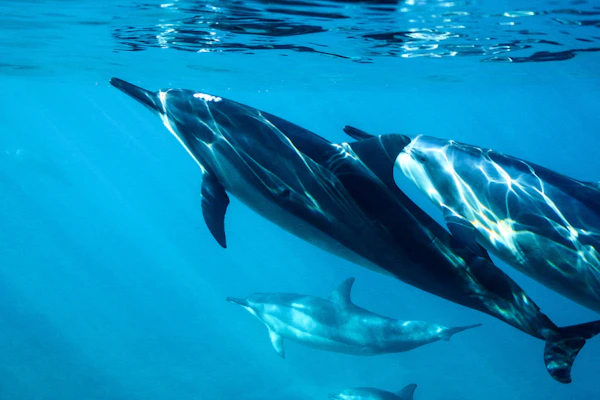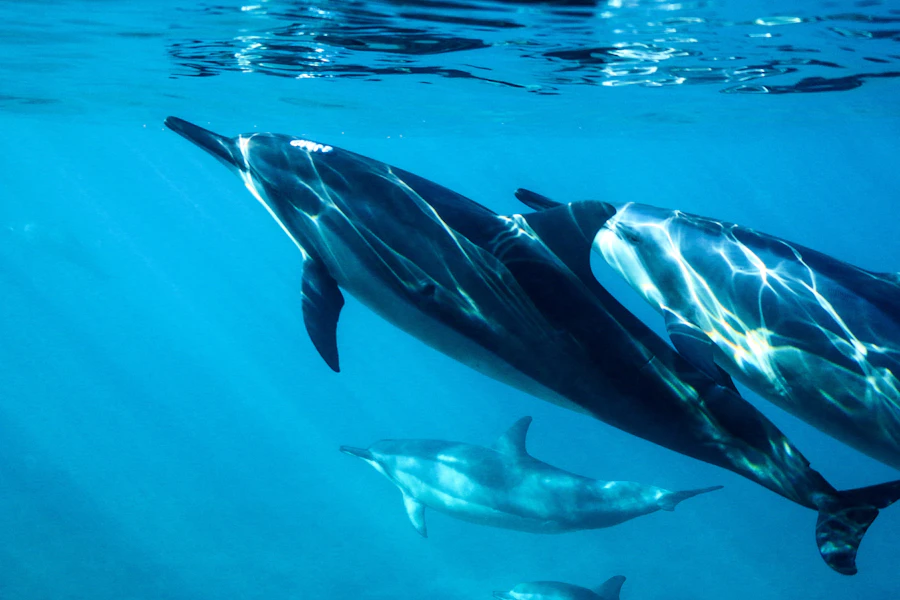
The birth of a dolphin is one of nature's most remarkable events — and one of its most urgent. Unlike land mammals, a newborn dolphin must be swimming and breathing within seconds of birth, in an ocean filled with predators, without the luxury of a warm den or a protected nest. Everything about dolphin birth and early development is shaped by this extraordinary pressure.
The story of a baby dolphin's life — from conception through childhood to adulthood — is a story of one of the most intensive and extended periods of learning and development in the animal kingdom.
Birth: Tail First
Dolphin calves are born tail-first, unlike most land mammals that are born head-first. This is thought to minimize the risk of drowning during the birth process — if the calf emerged head-first, it might take its first breath while still partially submerged. By emerging tail-first, the head (and blowhole) is the last part to exit, minimizing the time between emergence and the first breath.
Birth happens relatively quickly once labor begins — typically within an hour or two. The mother is often attended by one or more "auntie" dolphins — other females who assist with the birth and help guide the newborn to the surface for its first breath. This cooperative birthing behavior is one of many indicators of the complex social bonds in dolphin communities.
The First Hours of Life
A newborn bottlenose dolphin is typically about 1 meter long and weighs between 15 and 20 kilograms — roughly the size of a large dog. Within minutes of birth, the calf must be swimming, surfacing to breathe, and staying close to its mother. The calf's dorsal fin and tail flukes are soft and floppy at birth (to allow passage through the birth canal) but stiffen within hours.
For the first several hours, the mother and calf engage in constant close contact. The mother whistles constantly — imprinting her signature whistle on the calf's memory so it can identify her by sound in the vast ocean. This imprinting process is critical: in a large pod, a calf that cannot identify its mother's voice could quickly become lost and fail to survive.
Nursing: Dolphin Milk
Dolphin calves are nursed underwater. The mother has two mammary slits on her underside, and the calf stimulates milk release by nudging them. The mother's nipple is not protruding — the calf creates suction and the mother actively ejects milk into the calf's mouth in a rapid stream. The whole nursing interaction typically lasts only 5–10 seconds, repeated many times per day.
Dolphin milk is extraordinarily rich — it contains about 30% fat, compared to human breast milk's 4%. This high fat content allows rapid weight gain and the development of the thick blubber layer the calf will need for insulation and buoyancy. Calves can gain weight very rapidly in the early weeks of life.
| Life Stage | Age | Key Development |
|---|---|---|
| Newborn | Birth | Born tail-first, 1m, 15–20kg |
| Infant | 0–6 months | Nursing, imprinting, rapid growth |
| Calf | 6 months – 3 years | Learning to hunt, social skills |
| Juvenile | 3–8 years | Independence, social integration |
| Adult | 8–12 years | Reproductive maturity |
| Full adult | 12+ years | Peak physical and social development |
Learning Everything From Mom
Dolphin calves spend the first several years of their lives in an intensive apprenticeship with their mothers. Almost everything they need to know to survive — where to hunt, what to eat, how to cooperate, which dolphins to trust, how to use tools (in populations where tool use exists) — is learned through observation and practice during this period.
The length of this learning period — potentially 3–6 years of nursing, and several more years of close association — is unusual among mammals and appears to reflect the sheer amount of knowledge a dolphin needs to accumulate. This is not a simple animal with instinctive behaviors; it is a complex social creature that must learn its culture.
Mortality and Survival
Despite their intelligence and the intensive care they receive, dolphin calves face significant mortality risks. Estimates suggest that between 20% and 50% of calves in some populations do not survive their first year. Predation by sharks is a significant risk, as is disease, starvation (if the mother cannot produce enough milk), and — increasingly — human-caused threats including entanglement in fishing gear, boat strikes, and pollution.
Mothers are fiercely protective of their calves. Documented behaviors include mothers carrying deceased calves for days — interpreted by researchers as a mourning response — and groups of dolphins working collectively to protect vulnerable calves from shark attacks.
Conclusion
The life of a baby dolphin is a story of extraordinary effort — on the part of the mother, the social group, and the calf itself. The intensive period of learning and development that follows birth is what makes dolphins the animals they are: highly intelligent, culturally sophisticated, and socially complex. Every adult dolphin you see has survived this demanding gauntlet and carries with it years of accumulated knowledge, relationships, and experience that shape every aspect of its behavior.